12 Conference Evening Entertainment Ideas That Work
The ballroom can empty fast after the final breakout session. Your guests have spent all day listening, networking, and checking email between meetings. The right conference evening entertainment ideas give them a reason to stay, relax, and actually connect with the people they came to meet.
The goal is not to fill time with noise. It is to create a shared experience that feels worth leaving the hotel room for. Great evening programming changes the temperature of a conference: attendees stop being people with badges and become a crowd with stories, inside jokes, and a little more energy for tomorrow.
What Makes Conference Evening Entertainment Work?
Start with the reality of your group. A 75-person executive retreat needs a different kind of night than a 1,000-person sales conference. Consider the room layout, the age range, whether guests are traveling with partners, how formal the event feels, and whether the evening is meant to encourage networking or deliver a big celebratory finish.
The strongest choices are easy to join. Guests should not need special skills, a costume change, or an explanation that takes five minutes. They should be able to participate immediately, whether that means requesting a song, tasting something unexpected, stepping into a photo moment, or cheering on a colleague.
It also pays to think beyond the first 20 minutes. A novelty act can create a quick burst of attention, but does it give guests a reason to stay for two hours? The best entertainment has momentum. It creates small moments throughout the night and makes people feel like they might miss something if they leave early.
12 Conference Evening Entertainment Ideas for Real Engagement
1. Interactive dueling pianos
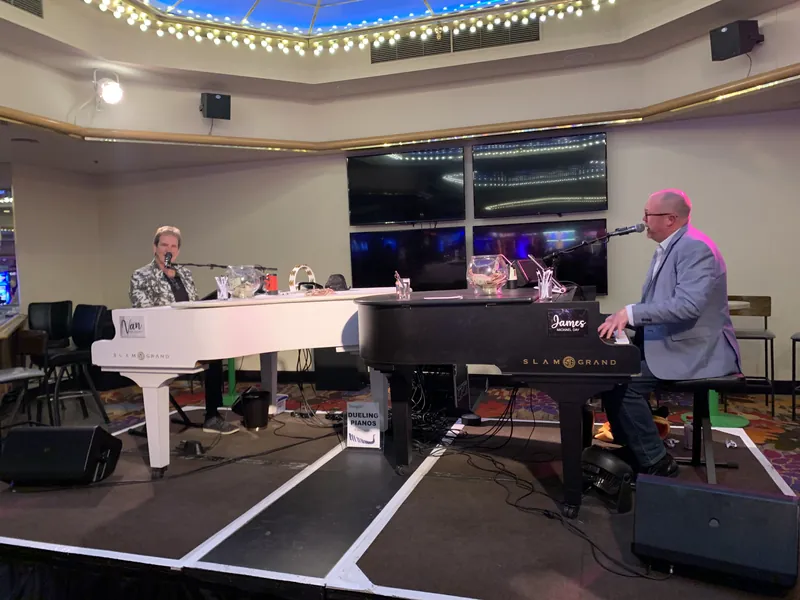
A request-driven dueling piano show is built for mixed conference crowds. Guests write down the songs they want to hear, performers play the hits, and the room quickly turns into a sing-along. One table may request classic rock, another wants 2000s pop, and the next wants country. That variety is exactly the point.
Unlike a standard cover band set, the audience helps shape the show. It works especially well for awards dinners, sales kickoffs, closing-night parties, and client appreciation events where you need broad appeal without forcing anyone onto a dance floor. Modern Dueling Pianos brings the performers, professional sound, and premium piano equipment together as a complete event package, so planners get a high-energy show without piecing production together themselves.
2. A casino night with purpose
Casino tables are a dependable choice when networking is the main priority. Guests can drift between blackjack, roulette, and poker while conversations happen naturally. Use play money and offer raffle entries or event-branded prizes for top earners to keep the format fun and low-pressure.
A casino night needs enough dealers and tables to avoid a crowded bottleneck. It is also better for a reception-style event than a seated dinner, since guests need room to circulate. Add a lively host or music between rounds so the room does not feel like a quiet trade show floor.
3. A live band with a clear job
A live band can be outstanding, but only when the format fits the room. For a formal dinner, choose musicians who can begin with polished background sets and build toward dancing later. For a celebration-first crowd, book a band that knows how to read the room, shorten the gap between songs, and keep the dance floor moving.
Be careful with a band that plays only one genre. A niche sound may be perfect for the right group, but conferences usually bring together several generations and regions. Familiar songs win when your job is to include the whole room.
4. Team game-show competition
Turn departments, sponsors, or regional teams into contestants with a custom game show. Trivia, music intros, visual puzzles, and rapid-fire challenges give people an easy way to participate without the awkwardness of forced icebreakers.
This idea works best when the host is sharp, the questions are tailored, and the pacing stays quick. Include a few questions about the conference theme, but do not make the entire game a test on company policy. The entertainment should feel like a reward, not another session.
5. A food and drink experience
Instead of simply opening bars and passing appetizers, make the menu part of the entertainment. Think chef stations, regional tasting tours, zero-proof cocktail demonstrations, chocolate pairings, or a friendly cook-off judged by attendees.
This is a strong option for groups that prefer conversation over dancing. It also gives sponsors natural visibility if they can support a station without turning it into a sales pitch. Plan service carefully: long lines can kill the social flow faster than almost anything else.
6. Roaming performers
Close-up magicians, caricature artists, living statues, mentalists, and other roaming performers bring energy directly to small clusters of guests. They are especially useful during cocktail hour, dinner transitions, or in large venues where one stage show cannot reach every corner.
Roaming talent is usually an enhancement rather than the entire evening program. Pair it with music, food stations, or a main act. That gives guests multiple ways to engage and prevents the experience from feeling scattered.
7. A themed party guests can actually attend
Themes work when they are easy. A neon night, vintage lounge, tropical resort party, or local-city celebration can guide decor, music, menus, and photo opportunities without demanding that everyone buy a costume.
Avoid themes that require obscure knowledge or complicated dress codes. Your attendees may have flown in that morning, come straight from sessions, or packed only business attire. Give them a simple invitation to join the fun, not another logistical task.
8. Comedy with smart guardrails
A talented comedian can create a memorable shared laugh, especially after a content-heavy day. The trade-off is obvious: comedy is subjective, and corporate audiences can be diverse in ways a club audience is not.
Choose a performer with proven corporate experience and give them a clear briefing on your audience, culture, and red lines. Keep the set focused, upbeat, and inclusive. If you are unsure how humor will land, a skilled emcee who adds light comedic energy throughout the night can be the safer choice.
9. A high-impact photo activation
Photo booths have come a long way from a curtain and a strip of prints. A branded glam booth, 360 video setup, magazine-cover portrait station, or AI-style backdrop can give guests a fun takeaway while creating event content.
The best activations are fast and flattering. Make sure lighting is excellent, the setup can handle traffic, and guests receive their images quickly. Place it near the action but not directly in a main traffic lane, where a line can disrupt the room.
10. Karaoke, but make it optional
Karaoke can be brilliant for a confident, social crowd. It can also become painfully quiet if the first singer is hesitant. A live-band karaoke format or a strong host makes a major difference because performers can support guests and keep the energy high between singers.
Use it when your company culture already embraces friendly competition and personality. For a more reserved audience, keep karaoke as a side activation rather than the headline act. That way, the enthusiastic guests can take the mic while everyone else enjoys the show.
11. A local experience that travels indoors
Give out-of-town attendees a taste of the host city without sending everyone across town. Bring in local musicians, regional food makers, artists, or cultural performers who can create a genuine sense of place.
This approach is particularly effective for destination conferences. Keep it polished and relevant rather than turning local culture into a costume. A well-produced local element gives your event character and helps attendees remember where they were when the best conversations happened.
12. A finale worth staying for
Many conference parties fade out because there is no ending. Build a moment guests can anticipate: a surprise performance, a major prize drawing, a big group sing-along, an awards reveal, or a final dance set that brings the room together.
The finale does not need to be expensive. It needs to be clear, well-timed, and worth the wait. Announce it early enough to create anticipation, then deliver on the promise.
How to Choose the Right Evening Entertainment
Before booking, decide what success looks like. If you want guests meeting new people, choose entertainment with natural pauses and movement, such as casino tables, tasting stations, or roaming acts. If you want a full-room celebration, prioritize a main-stage experience with participation, familiar music, and a confident host.
Timing matters too. A welcome reception may need flexible entertainment that supports conversation. A final-night event can go bigger because attendees are ready to celebrate. If dinner runs long, your entertainment partner should also be able to adjust without losing the room. Professionalism is not just showing up on time. It is knowing how to protect the energy when the schedule changes.
Finally, do not underestimate production. Great performers can still struggle with poor sound, weak lighting, or a stage placed behind dinner tables. Ask who provides equipment, how load-in will work, what space is required, and how the act handles requests or audience participation. Those details are where a fun idea becomes a polished event.
Your attendees will remember the session notes they need. Give them an evening they want to remember too - one where the room gets louder, conversations get easier, and nobody is checking the elevator line before the best part starts.