


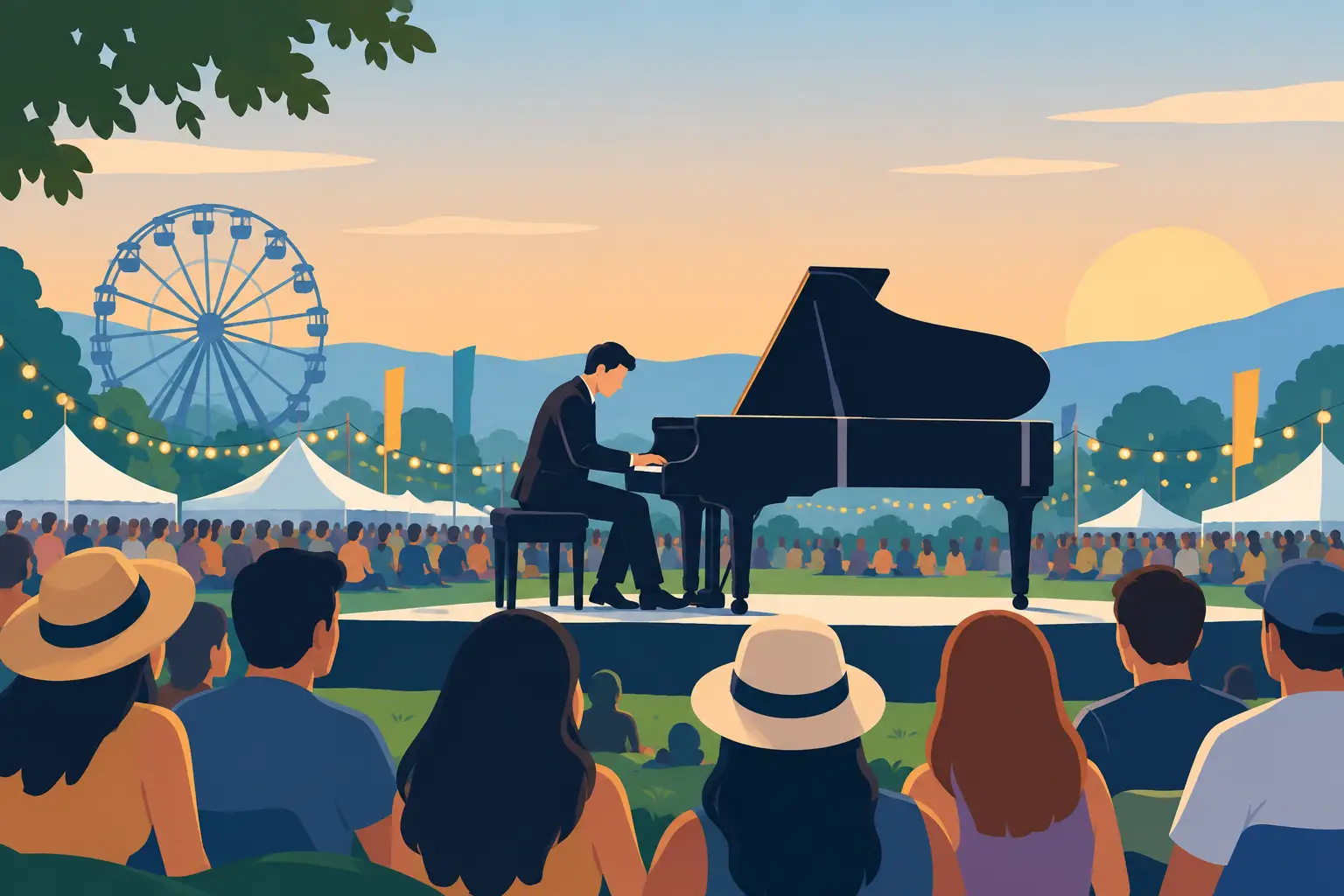
A festival site can look packed and still feel flat. Guests may be eating, browsing vendors, or waiting for the next big act, but not necessarily connecting with one another. Festival piano entertainment changes that fast by giving people a reason to stop, sing, make requests, and become part of the show.
A great piano performance is not just music in the background. It is a live, crowd-powered experience that can meet guests where they are, then pull them into the action. For festival producers, that matters. You need entertainment that keeps energy moving between headline acts, welcomes different age groups, and gives attendees something they will talk about on the way home.
Why Festival Piano Entertainment Works So Well
Festival audiences are wonderfully unpredictable. One group may want country classics, another may want 90s throwbacks, and someone near the stage may be ready to belt out a huge rock anthem. A request-driven dueling piano show has room for all of it.
Instead of asking guests to quietly watch a fixed set, the performers invite them into the show. They request songs, sing the choruses, cheer for friends, and help shape the set list in real time. That participation turns a casual crowd into a shared moment.
It also solves a common festival challenge: broad appeal. A DJ can be a strong fit for late-night dance energy, and a specialty band can serve a specific audience beautifully. But when your event needs recognizable songs across decades and genres, live piano entertainers can pivot quickly. One moment it is a classic singalong. The next, it is a current pop hit, a country favorite, or the song that gets three generations singing together.
The result is active entertainment without requiring every guest to dance. People can join from a picnic table, vendor line, beer garden, VIP area, or the front of the stage. That makes the format especially effective for community festivals, food and wine events, city celebrations, arts fairs, fundraisers, and corporate festival-style gatherings.
Build the Show Around Your Festival Flow
The best entertainment choice depends on when and where the performance happens. Festival piano entertainment can carry a featured evening slot, but it is also a powerful tool for the spaces between your marquee attractions.
For an afternoon set, performers can create a welcoming, upbeat atmosphere that encourages people to settle in. As the day picks up, the show can become more interactive, with bigger choruses and higher-energy requests. At night, it can turn into a full singalong party that keeps guests on-site longer and gives the festival a strong finish.
Think about the purpose of each performance block. Is your main goal to create a central gathering point? Keep guests engaged while a stage changes over? Give sponsors and VIPs a lively place to host? Encourage attendees to stay for food, drinks, and evening programming? The answer should guide the set time, stage placement, and sound plan.
A dueling piano act is particularly useful when you want flexible pacing. A skilled team reads the audience and adjusts. If families are gathered early, the show can stay broad, fun, and familiar. If the crowd becomes more adult and ready to party later, the energy can rise with it. That kind of responsiveness is hard to get from entertainment built around a rigid set list.
Give Requests a Clear Home
Requests are the engine of the experience, but they work best when guests know they are welcome. Put a simple note in the event schedule, on stage signage, or in emcee announcements: the pianists play what the crowd wants to hear.
This does more than promote the act. It gives attendees permission to participate. Once a few requests are played, people understand that the show belongs to them too. The energy builds naturally from there.
If your festival has a theme, lean into it without over-controlling the playlist. A harvest event may want feel-good country and classic rock in the mix. A pride celebration may call for massive pop anthems. A community event may benefit from songs that grandparents, parents, and college students all recognize. Let the performers know the audience profile and event goals, then leave room for the crowd to surprise everyone.
Production Details That Protect the Guest Experience
A high-energy show needs more than talented musicians. Outdoor and multi-stage events require real production planning. Sound coverage, power access, weather protection, load-in timing, and stage visibility all affect whether a performance feels premium or gets lost in the festival noise.
Start with the location. A piano show needs a stage or performance area where guests can see the performers and gather comfortably. It does not have to be enormous, but it should feel intentional. If the entertainment is hidden behind vendor tents or placed where only a few people can hear it, even an excellent show will have a harder time building momentum.
Sound is just as important. Your production team should consider nearby stages, vendor generators, street noise, and the size of the audience area. Too little sound leaves the show feeling distant. Too much sound can interfere with neighboring programming. Professional performers who bring quality piano equipment and sound systems can coordinate with your festival team to create coverage that fits the space.
Outdoor conditions deserve attention early. Ask about a covered stage, level ground, access routes, and contingency plans for wind or rain. Confirm load-in and soundcheck times well before gates open. Festivals run on tight schedules, and punctual, prepared vendors make life easier for everyone from the stage manager to the volunteer coordinator.
For a turnkey option, Modern Dueling Pianos brings accomplished performers, professional sound, high-quality piano equipment, and the crowd-first format that makes the stage feel alive. That means fewer moving pieces for organizers to chase down and a show built to get guests involved from the first request.
Make the Performance Part of the Festival, Not a Side Attraction
The strongest live entertainment does not sit separately from the rest of the event. It supports the entire festival experience.
Use the piano show to spotlight a sponsor, welcome a local partner, celebrate a contest winner, or recognize volunteers. A quick birthday shoutout, anniversary dedication, or friendly crowd challenge can create the kinds of personal moments attendees share with friends. Keep these additions brief and fun. The music should remain the center of the experience, but a little local personality makes the show feel made for your event.
Placement matters here too. A centrally located stage can draw people toward vendors and beverage areas. A performance near a seating zone can make it easier for mixed groups to relax, eat, and still enjoy the action. If your festival covers a large footprint, schedule the act when it can pull the most people into an underused area.
Promotion should be specific. Saying live music is coming does not create the same anticipation as telling people they can request their favorite songs and sing along with two dueling pianists. Show the participation. That is the difference.
Know When Dueling Pianos Are the Right Fit
Dueling pianos are a strong choice when you want high participation, familiar music, and a show that can shift with the crowd. They are not always the answer to every programming need. If your festival is built around showcasing only original local artists, a request-based cover format may not fit the mission. If the event has extremely strict noise limits or no viable covered performance space, planning may need extra care.
But for festivals trying to create a big, inclusive party without narrowing the music to one generation or genre, the format delivers. It gives guests a reason to gather, a way to participate, and a memory that feels personal rather than programmed.
The best final question for any festival producer is simple: what will make guests stay for one more song? Give them a piano, a request, and a chorus they already know. The crowd will take it from there.